Two-Vehicle Crash on Route 208: Understanding How Fault Is Determined
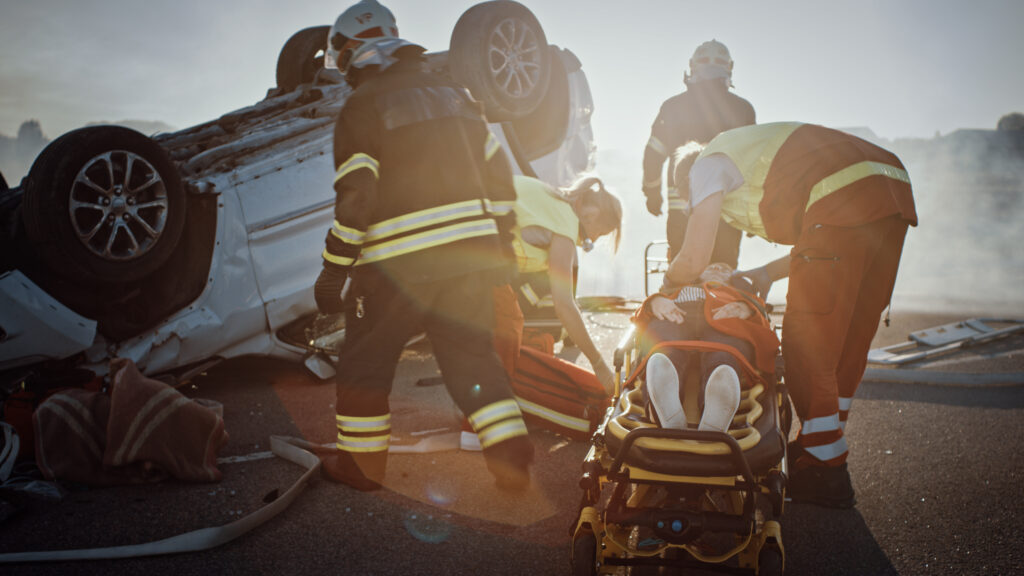
A two-vehicle crash on Route 208 (Leesburg Volant Road) in Springfield Township, Mercer County, recently left both drivers with possible injuries and resulted in a citation for one driver after crossing into the opposite lane. According to the Pennsylvania State Police, the crash occurred on December 10, 2025, when a vehicle crossed the center line while navigating a left-hand curve and struck another car traveling southbound, leading to reported injuries for both drivers. One driver was cited for unsafe speed.
For drivers in Northwestern Pennsylvania—including Erie, Crawford, Mercer, Venango, and Warren counties—accidents like this raise important questions: How is fault determined? Why does it matter? And how does it affect your right to compensation? Understanding the answers is critical to protecting your legal rights after an auto accident.
What “Fault” Means in Pennsylvania Auto Accident Cases
In Pennsylvania, fault refers to the legal responsibility for causing an accident. Rather than simply deciding who “hit” whom, fault is determined by analyzing the actions of each driver to see whether they acted reasonably and lawfully under the circumstances.
Unlike some “no-fault” states where drivers turn to their own insurance regardless of responsibility, Pennsylvania follows a fault-based system. This means the driver whose negligence caused—or contributed to—the accident can be held responsible for resulting injuries, property damage, and other losses.
Pennsylvania’s Modified Comparative Negligence Rule
Pennsylvania applies a modified comparative negligence rule, sometimes called the “51 % rule.” Under this law:
- You can recover compensation if you are 50 % or less at fault.
- If you are found to be more than 50 % at fault, you generally cannot recover compensation from the other party.
- If you share partial fault (e.g., 30 %), your total damages award is reduced by your percentage of fault.
Example: If total damages are $100,000 and you are found 30 % at fault, you would be eligible to recover $70,000 ($100,000 minus 30 %).
This rule emphasizes why accurately determining fault is so important—not just whether a crash occurred, but how much responsibility each driver bears.
How Fault Is Determined After a Two-Vehicle Crash
Fault isn’t assigned randomly. Investigators, insurance adjusters, and sometimes courts look at multiple types of evidence to determine how the accident occurred, including:
Police and Crash Reports
The official crash report often includes details about the roadway, weather conditions, citations issued, and initial observations from responding officers.
Traffic Violations
Actions such as crossing into the opposite lane, speeding, failing to signal, or improper turning can be strong indicators of negligence.
Scene Evidence and Photos
Skid marks, vehicle damage, and positioning of vehicles help reconstruct the events leading to the crash.
Witness Statements
Independent witnesses can provide impartial accounts of what happened before impact.
Surveillance or Dashcam Footage
Video evidence can sometimes decisively support one driver’s version of events.
Fault may also be shared if both drivers contributed to the conditions that caused the collision. For example, if one vehicle drifted into the wrong lane (as alleged in the Route 208 crash) while the other was speeding or distracted, fault could be split between the drivers.
Why Fault Matters for Your Claim
Fault affects multiple aspects of an auto accident case:
- Who Pays: The at-fault driver’s insurance is typically responsible for compensation.
- Compensation Amount: Your share of fault reduces your recoverable damages proportionally.
- Legal Strategy: Disputes over fault often require legal analysis, negotiation, and sometimes litigation.
Insurance companies may attempt to assign higher fault percentages to minimize payouts. Without professional legal representation, you may be unaware of how to challenge those assessments effectively.
Protecting Your Rights After a Two-Vehicle Accident
If you were involved in a two-vehicle crash like the one on Route 208, you have the right to pursue compensation for:
- Medical expenses (past and future)
- Lost wages
- Pain and suffering
- Property damage
- Other related losses
But to do so successfully, you must understand how fault will be evaluated in your case—especially under Pennsylvania’s modified comparative negligence rules.
Get Legal Help After a Two-Vehicle Crash in Northwestern Pennsylvania
Car accidents can have lasting physical, emotional, and financial impacts. Determining fault is a complex legal matter that plays a major role in whether you’re able to recover compensation.
If you’ve been injured in a car crash, the Travis Law Firm is ready to help. We provide compassionate, aggressive representation to secure the compensation you deserve.
Call us today at (814) 277-2222 or (814) 455-3839, or use our online contact form to schedule your free consultation.