Pennsylvania DUI Law After Act 58: Key Changes Drivers Need to Know
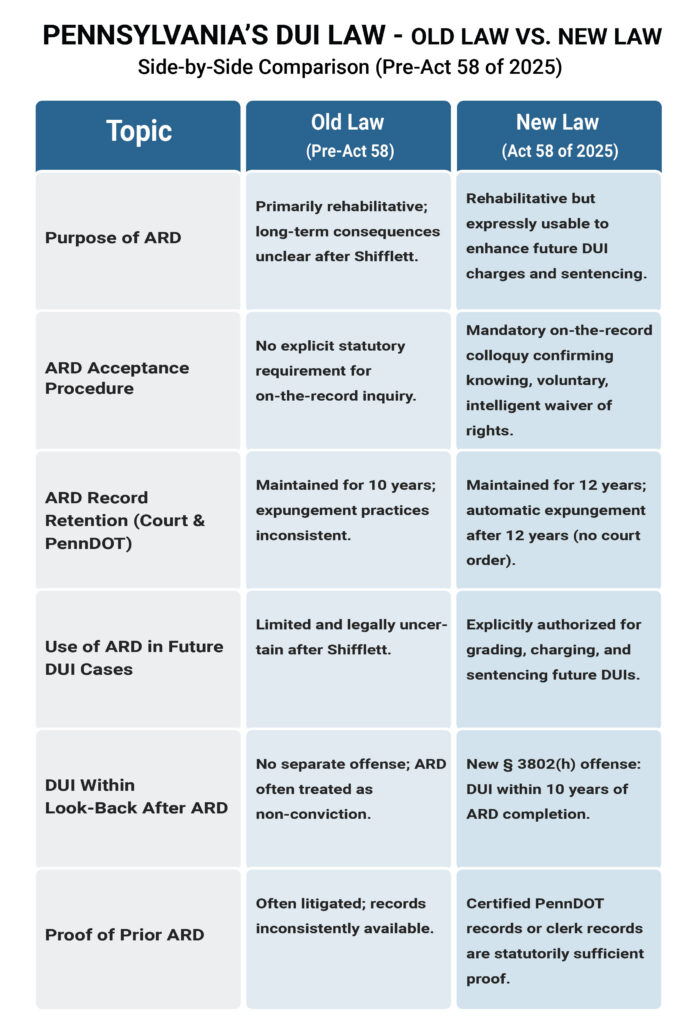
Pennsylvania’s DUI laws changed dramatically with the passage of Act 58 of 2025, altering how prior offenses, ARD participation, refusals, and sentencing are handled across the state. What was once viewed as a rehabilitative system with limited long-term consequences has shifted toward a framework that treats DUI-related outcomes as lasting legal events. These changes affect not only repeat offenders, but also first-time defendants who may believe diversion programs like ARD will shield them from future consequences.
The side-by-side chart below breaks down how Pennsylvania’s old DUI law compares to the new law under Act 58, highlighting the areas where penalties, eligibility, and judicial discretion have changed most significantly.
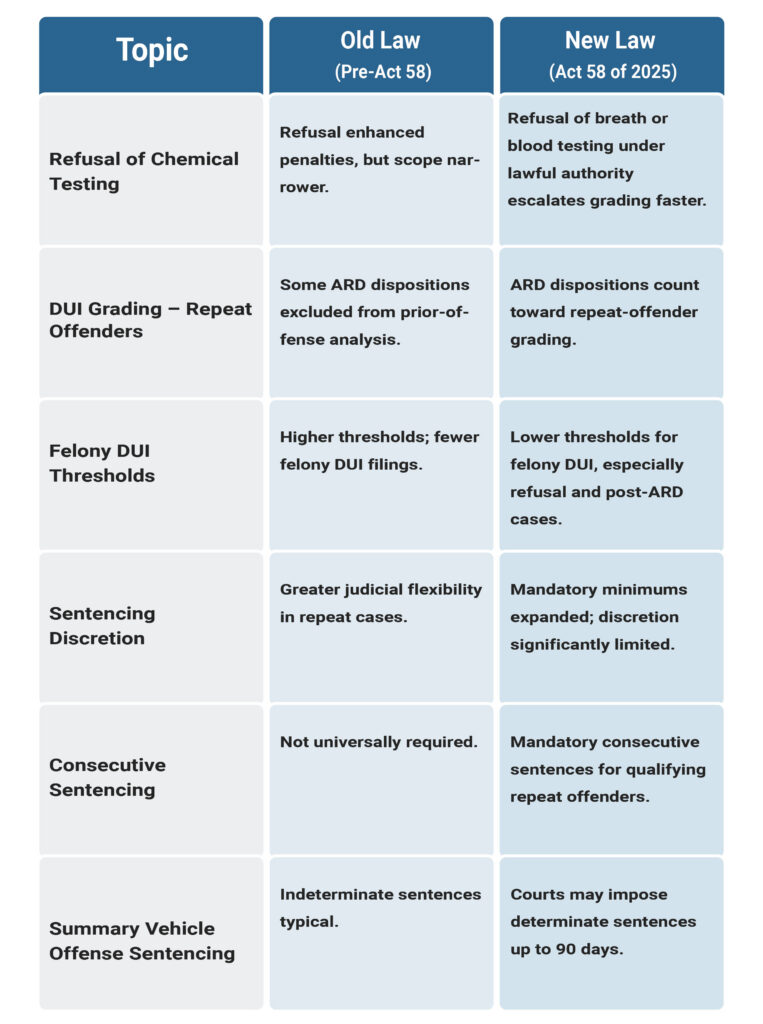
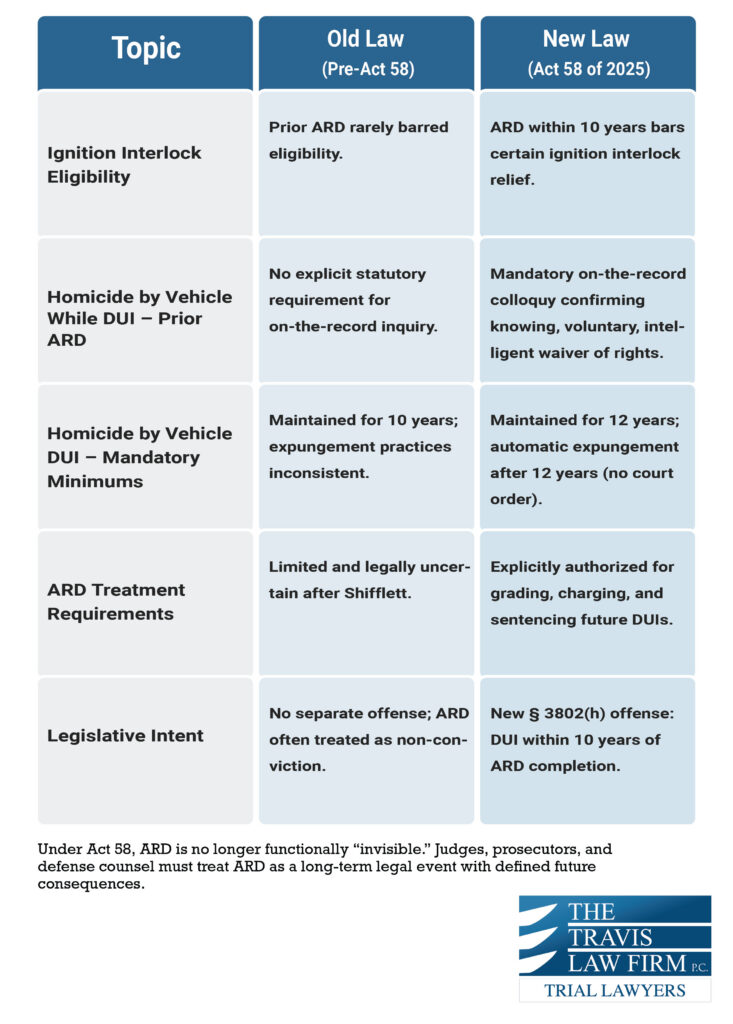
Under Act 58, Pennsylvania has made it clear that DUI cases—and outcomes like ARD—are no longer treated as temporary or “invisible” resolutions. Prior dispositions now carry defined consequences that can influence future charges, grading, sentencing, and driving privileges for years to come. With expanded mandatory minimums and reduced judicial discretion, the stakes are higher than ever for anyone facing a DUI charge. Understanding how the new law applies to your specific circumstances is essential to making informed decisions and protecting your long-term interests.
Experienced DUI Defense in Northwestern Pennsylvania
The Travis Law Firm has helped drivers across Erie, Crawford, Mercer, Venango, and Warren counties navigate DUI arrests, protect their licenses, and defend their future. Don’t wait — contact The Travis Law Firm today for a free, confidential consultation. Call (814) 277-2222 or (814) 455-3839, or use our online contact form to schedule your consultation. Protect your rights before it’s too late.